Why Big Yearly Goals Fail (and What Works Better)
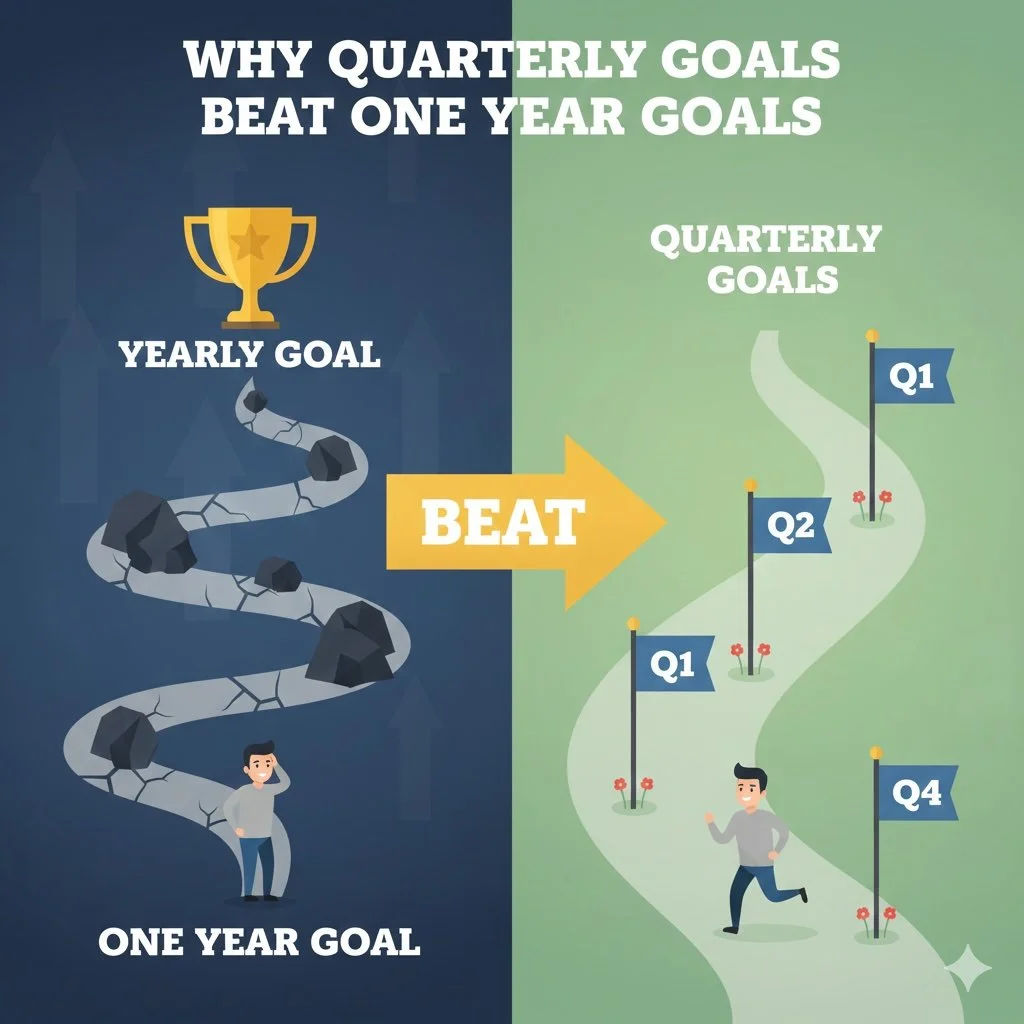
Every January, many of us set ambitious one-year goals, only to feel overwhelmed by the end of the month and discouraged by the end of February. The problem isn’t motivation; it’s scale. One-year goals often feel distant, daunting, and disconnected from daily life. That’s why quarterly goals are so effective.
Quarterly goals build momentum. When you work in 90-day windows, progress becomes visible faster. Small wins stack up, confidence grows, and motivation increases. Instead of waiting a year to see change, you experience progress now, which fuels perseverance.
Quarterly goals are also more achievable. Life changes. Schedules shift. Seasons bring unexpected challenges. A three-month goal allows flexibility while still providing clarity. You can assess, adjust, and refocus without feeling like you’ve “failed” the year.
Most importantly, quarterly goals feel less daunting. A year can feel abstract; a quarter feels manageable. It prioritizes faithfulness over intensity, steady obedience over short-lived bursts of effort.
Here’s a simple framework to start:
Spiritually: Commit to a daily Scripture rhythm, pray intentionally for specific people, or read one book of the Bible over the next 90 days.
Physically: Aim for consistent movement, improved sleep, or one healthy habit, not perfection.
Relationally: Invest in a few key relationships through intentional conversations, shared meals, or encouragement.
Faithful growth rarely happens in giant leaps. More often, it happens in focused, faithful steps—taken one quarter at a time.